
Analysis: Testing the CO resistance of refractories by thermogravimetrical measurements
For the first time, testing refractories with CO-TG analysis delivers reproducible and quantifiable results on CO resistance through the in situ measurement of carbon deposition within the material under a controlled carbon monoxide atmosphere.
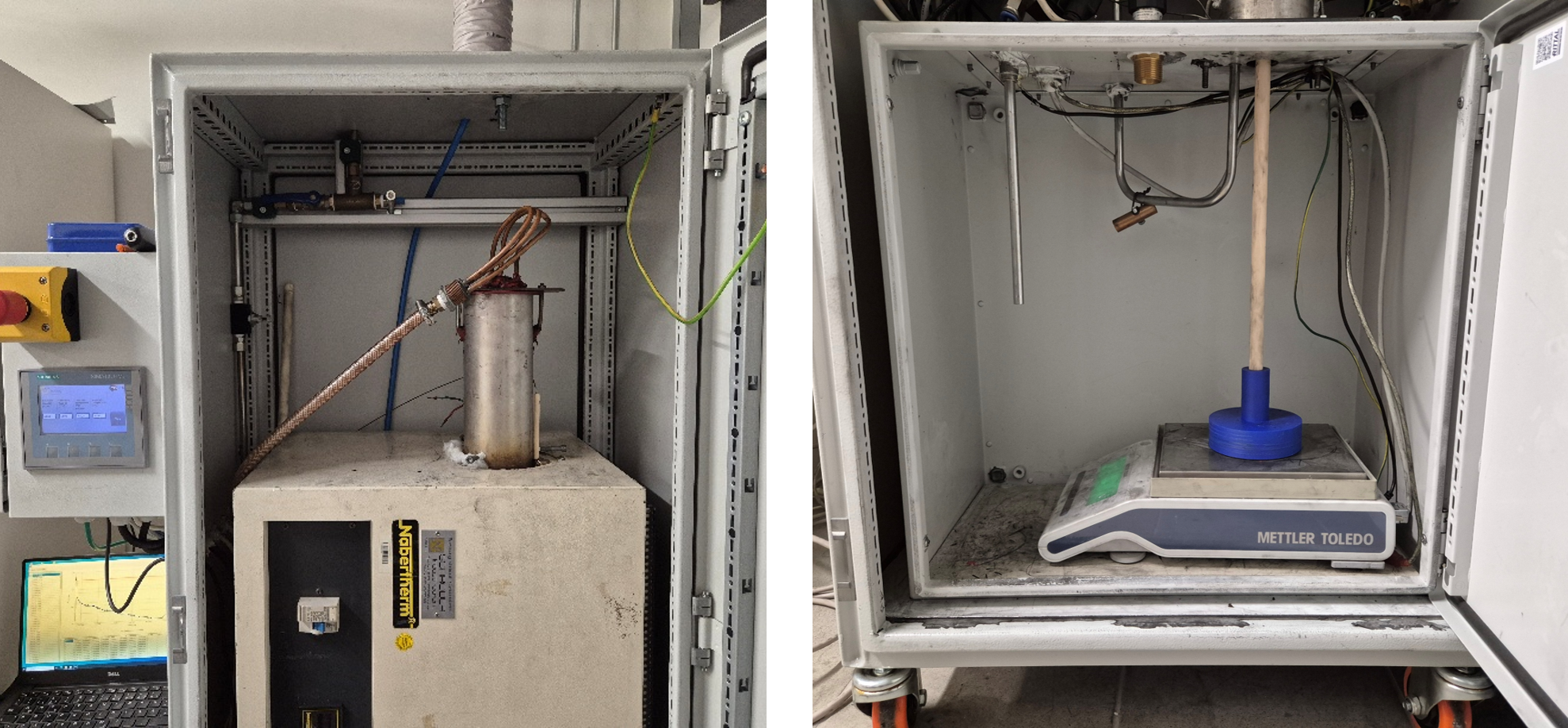
Beschreibung der Methode
Compared to the standard testing method for CO resistance in refractory materials, our thermogravimetric test stand provides numerical data on carbon deposition in refractory materials. This deposition causes the so-called CO bursting, which destroys linings under working conditions. We expose cylindrical samples in a reaction chamber flooded continuously with pure carbon monoxide gas and measure the mass change via a precision scale.
In addition to cylindrical specimens, our CO-TG testing system allows us to analyze raw materials for refractory materials in the form of bulk powders. This is of particular interest when these raw materials, either naturally or as a result of mechanical processing methods, tend to contain reducible iron compounds. This makes it possible to select suitable components for the mixture even before the actual material development begins.
The results of our thermogravimetric measurements enable us to provide targeted support for the development process of CO-resistant refractory materials at the customer’s site and to quickly identify indicators that point the way toward successful material development. This approach facilitates the targeted development of CO-resistant materials and, in addition to fostering innovation, builds trust with customers in the end-user industries.
Problemstellung
Manufacturers and research institutes are tasked with developing and optimizing new products, while users need support with product selection, service life forecast and damage analysis.
Lösungsansatz der FGF
We test your materials in our CO-TG test chamber and determine the rate of carbon deposition in the microstructure as a function of aging time, temperature, and CO flow rate. Based on the TGA curves obtained, we can thus determine the material’s tendency toward carbon deposition and, consequently, its CO resistance. By comparing measurements of different materials or grades of raw materials, it is possible to directly select the material with the highest CO resistance.
The Forschungsgemeinschaft Feuerfest e. V. is the only institute that offers this quantifiable analysis of carbon deposition. We are always available to provide personalized consultation and a demonstration of our testing method.
Vorgehensweise
Customer
You supply cylinders, bricks, bulk powders or your pre-mixed refractory concretes together with the processing instructions: mixing (duration, mixer), forming (self-flowing, vibration-cast concretes and duration/amplitude), setting (duration, temperature, humidity) and any other relevant information.
FGF
We prepare cylindrical specimens with a diameter of 50 mm and a height of 50 mm or bulk powder. These specimens are then exposed to pure carbon monoxide at a temperature of 500 °C for a defined period of time. During this time, we record the constant weight change and sample temperature in order to determine the CO resistance afterwards.
Probenanforderungen
Welche Proben werden benötigt?
For the test, cylindrical samples measuring 50x50 mm, bulk powder, or at least 5 kg of dry mix refractory concrete are required, together with the corresponding processing instructions. Where applicable, information on hazardous substances or a safety data sheet must also be provided.
Ergebnisse
You will receive a detailed report containing graphical presentations of the measured carbon deposition, as well as photographs of the samples taken before and after the CO-TG measurements were carried out.
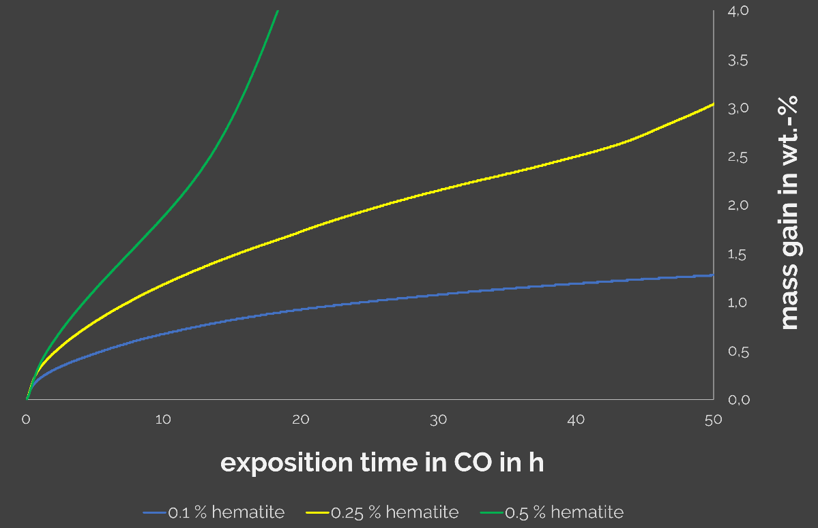
Figure 2: Sample analysis of the test results and graphical presentation for the client.
Praktischer Nutzen für den Kunden
The analysis helps you to avoid risks such as material failure caused by an unpredictable tendency towards carbon deposition in reducing atmospheres. It enables you to adjust recipes, optimise linings for CO-critical aggregates, and prevent production downtime caused by CO bursting of the refractory material.
Ihr nächster Schritt
Arrange a consultation now — we will advise you individually on testing the CO resistance of your refractory material.
We also recommend Raman spectroscopy for phase analysis, permeability measurement and scanning electron microscopy of specimens or fragments, in order to detect the presence of carbon phases – which are responsible for the CO bursting – and establish their extent.
Dr. Kerstin Hauke
📩 E-Mail: service@fg-feuerfest.de
☎ Telefon: +4926249433190